Picking a PhD topic is a four-year bet on your own future attention, and most people place it with the wrong information. You can recite the key papers, the conference circuit, the rising names, and still not know whether the field will hold you in year three. WisPaper, an AI academic agent, makes that bet checkable before you commit.
The whiteboard moment is where the gap shows. Three candidate topics sit on the board, your advisor asks which one you’ll still care about in year three, and you have no honest answer. You can defend each one for about ninety seconds. After that it’s hand-waving about how hot everything is right now.
Three Topics on a Whiteboard, One Advisor Watching
The usual way out is to pick the topic that feels most impressive this semester. That instinct ignores a basic asymmetry: the field moves while you’re inside it. A topic crowded today can be empty of open questions in two years. The question worth asking is which one has room to grow under sustained pressure.
The Hype Check: Trend or Bubble?
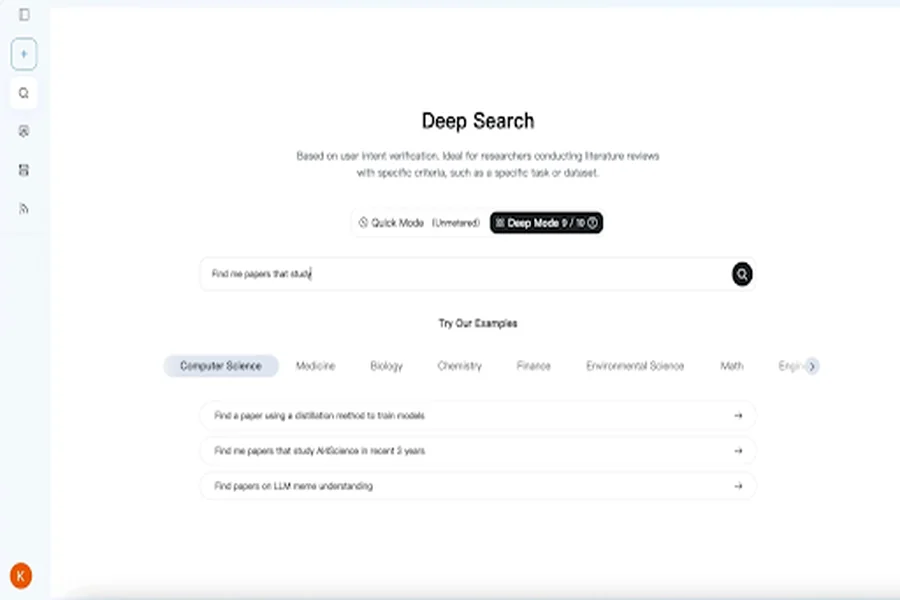
This is where the hype check comes in. Before you commit four years, you need to know whether a hot topic’s citation growth is a real trend or a bubble, whether papers compound on each other or just cite each other for a season. Deep Search pulls the trajectory apart: which lines of work still move, which spiked once and stalled. A topic that peaked in a single funding cycle looks identical to a durable one for months.
Finding the Gap You Can Defend
Finding the gap you can defend is the harder half. It is not enough that the field is healthy; you need a specific hole that no one has filled and that you can argue for. WisPaper’s Idea Discovery scans the indexed literature to surface openings adjacent to established work but not yet claimed. The result is a gap you can point to and describe, not a vague sense that the field has room.
Stress-Testing Your Topic Against the Field’s Trajectory
Stress-testing the topic means looking at where the whole field is pointing, not just your corner. Technology Radar Charts in WisPaper show how a subfield’s momentum has shifted over time, letting you compare candidates against each other instead of a feeling. If one trajectory bends upward while the other two flatten, that’s a different conversation than the one you had at the whiteboard. AI academic agent treats the decision as evidence, not preference.
Picking the Topic That Still Interests Year-Three You
The test that matters is the year-three question, and it is answerable if you gather the right signals first. A topic trending for structural reasons, with gaps you can defend and a trajectory you have checked, is one you can still care about when the novelty wears off. The point is not perfect prediction. It is walking into the meeting with your advisor holding better evidence than your enthusiasm.
