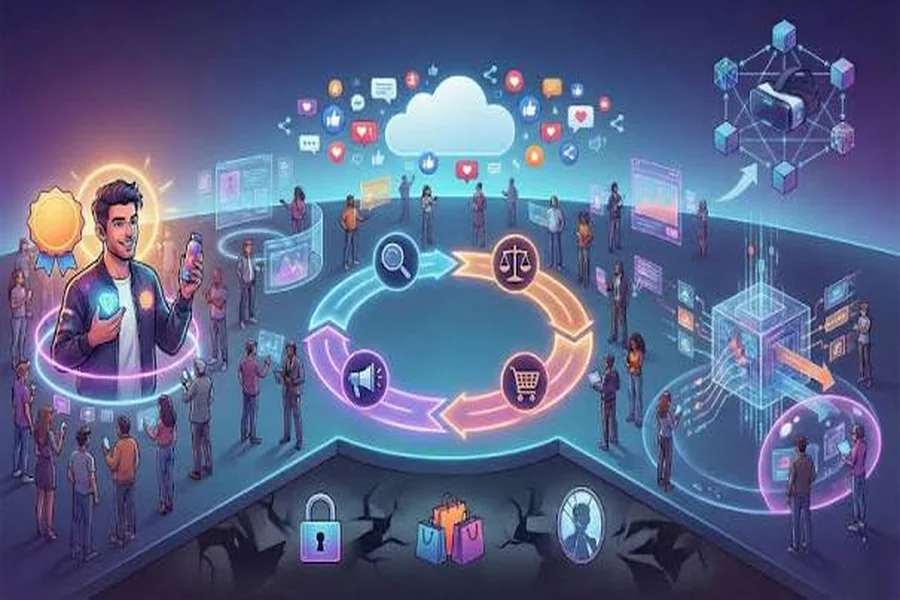
Many people don’t consider going through a ritual before they get out of bed, such as checking a phone. But that small task of unlocking the screen, checking notifications, and opening apps that we’re familiar with is as routine as making coffee in the morning. Digital rituals are ritualistic actions that take place online and are seemingly automatic. Rituals are not random habits but more likely have meaning; they may help to comfort, stimulate or give a feeling of control.
These schedules influence consumers more than just screen time. People who are interested in online gaming at PlayBaze Finland and entertainment more easily identify these rituals. But the attraction is not simply single and eventful; rather, it is the iterative process of anticipation, action and feedback that maintains the experience’s interest.
Why Digital Rituals Have Become Part of Everyday Life
This shift has moved us from occasional use of the Internet to continuous engagement. Ten years ago, accessing the internet was more of a conscious act.
Patterns are human nature. It can help eliminate uncertainty and provide a sense of comfort and familiarity, particularly in stressful or busy times, by repeating familiar digital behaviours.
For many users, it becomes a habit to do things like the following:
- Looking at social media once you wake up.
- You can enjoy customized news while you enjoy your coffee.
- You can also watch suggested videos during work hours.
- Researching options online prior to buying.
These rituals are not necessarily irrational; rather, they are ways to make the environment more simple. They also provide a platform for the opportunity of predicting user behaviour with great precision, though.
The Neuroscience Behind Digital Rituals
Dopamine and anticipation
This phenomenon is what makes it easy to do digital rituals even if they take a lot of time. Dopamine and anticipation are both linked to variable rewards. Variable rewards are associated with both dopamine and anticipation.
Dopamine is one of the most intriguing factors of digital behaviour. Contrary to popular belief, dopamine is not so much a measure of pleasure as anticipation. The brain responds more to unexpected rewards than predictable rewards. The concept of variable rewards is widely used in many digital experiences.
Examples include:
- Random Facebook interactions
- Unexpected flash sales
Rewards within apps that are mysterious
Users are still checking in, as they do not know the results. Being offered something valuable can sometimes prove to be more motivating than the reward itself. This dopamine cycle isn’t the same each time to produce satisfaction, but it does promote repeated engagement. It’s easy to repeat, and therefore comfortable. Repetition is comfortable, because it is simple
How to adapt to consumer rituals as brands
It’s increasingly difficult these days to find a business that operates by luck. Rather, they create products that seamlessly integrate into everyday routines.
- Recommendations help to cut down the search.
- Reminders daily for regular interaction.
- Progress indicators encourage users to keep going.
- Streak systems are not based on intensity but on consistency.
It is not necessarily about the maximum number of sessions; it is about making it a part of our lives.
Examples of Ritualized Digital Experiences
Digital Environment |
Typical Ritual |
Psychological Trigger |
Consumer Effect |
Social media |
Refreshing notifications |
Social validation |
Longer engagement |
Online shopping |
Daily deal browsing |
Anticipation |
Higher purchase intent |
Streaming platforms |
Evening viewing sessions |
Relaxation |
Habit formation |
Mobile gaming |
Daily login rewards |
Variable rewards |
Consistent participation |
Interactive entertainment communities, including online poker rooms |
Returning for new content and community discussions |
Curiosity and novelty |
Sustained digital engagement |
Digital betting ecosystems such as PlayBaze Finland |
Checking scheduled events, odds, and platform updates |
Predictable routines combined with uncertainty |
Increased familiarity with the platform interface |
These examples illustrate how digital rituals extend well beyond transactions. Communities, interfaces, recommendations, and repeated interactions all contribute to long-term engagement.
The emergence of digital rituals that are too much
Not all routines are detrimental. There are actually plenty of digital rituals that are definitely useful for improving efficiency and enjoyment.
Issues arise when automatic behaviour replaces careful decision-making.
Signs include:
- A never-ending look for the wrong thing.
- Failure to complete the given task and stop once it has been done.
- Regular interruptions of offline activities.
- Impatience with delay in receiving responses to notifications.
These are times when the choice is made for immediate gratification rather than future rewards, which behavioural economists often refer to as moments of short-termism.
Authoritative assessment: What these digital rituals mean for the future
Digital rituals will become more sophisticated as AI, predictive analytics and wearables continue to develop. Future platforms may be able to sense your mood, make context-aware recommendations and personalise your experience with very high precision.
Digital interactions will be seamless through voice assistants, augmented reality and smart interfaces. Businesses will still have an advantage in understanding how to appeal to consumers’ psychology. The key to success will be not only getting attention, but also seamlessly fitting into the user’s day-to-day life without intruding.
