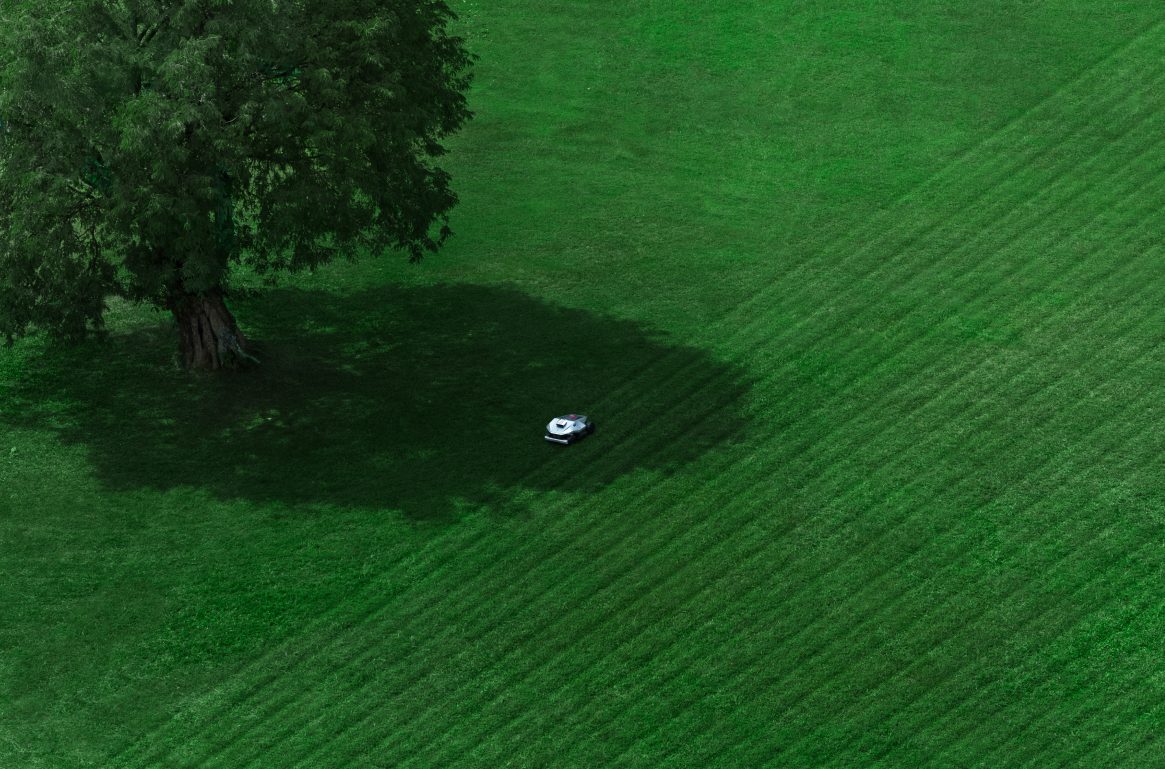
A robot mower that comfortably handles a quarter-acre suburban block doesn't scale linearly to a 2-acre lifestyle property—the math behind daily mowable area and single-charge coverage changes the calculation entirely. A unit covering roughly 1,000–2,000m² per charge cycle on a compact lot might need two, three, or more charge-and-mow cycles to cover a full acre (about 4,000m²) in a single day, depending on terrain, grass density, and battery capacity. For Australian acreage and lifestyle-block owners, understanding this conversion—rather than assuming "bigger property just needs a bigger mower"—is the real starting point for getting the setup right.
Understanding Acreage in Australia: From Acres to Hectares
Australian lifestyle blocks are commonly described in acres colloquially but measured officially in hectares—useful to know since manufacturer coverage specifications are often listed in square metres or hectares. A rough guide: 1 acre is approximately 0.4 hectares (about 4,000m²), so a typical 1–5 acre lifestyle block or hobby farm sits somewhere between 0.4 and 2 hectares of total land, though usable mowed area is often smaller once paddocks, sheds, and non-turf sections are excluded.
The Core Math: Daily Mowable Area vs Single-Charge Coverage
Converting Battery Runtime to Ground Covered
The two figures that actually matter for acreage planning are single-charge coverage (how much ground the mower cuts before needing to recharge) and total daily mowable area (how much it can realistically cover across multiple charge cycles in a day, factoring in recharge time). These numbers vary significantly by model, terrain, and grass thickness—check the specific coverage rating for any mower you're considering directly on the manufacturer's site rather than relying on generic marketing claims, since real-world performance on uneven acreage terrain often differs from flat-lawn test conditions.
Why This Matters More on Acreage Than Suburban Blocks
On a small suburban block, a single charge cycle often covers the entire property, so this math is largely irrelevant. On a 1–5 acre property, it becomes the central planning question: does the mower's daily mowable area actually exceed your property's total turf area with enough margin for regrowth between full-lawn passes? Undersizing this calculation is one of the most common acreage buying mistakes.
Multi-Battery Strategy for 1–5 Acre Properties
For properties toward the upper end of this range, a multi-battery setup—swapping a depleted battery for a charged one rather than waiting through a full recharge cycle—can meaningfully increase daily coverage without needing a second full unit. Whether a given model supports battery swapping, and what the actual coverage gain looks like, varies by manufacturer; confirm this directly on the official product page before assuming it's available. For hobby farms with dense grass growth through spring and summer, this strategy often matters more than raw single-charge capacity.
Paddock Zoning: Horse Tracks, Dirt Driveways and Fixed Obstacles
Paddock and Horse Track Maintenance
Horse paddocks and the tracks running along their perimeter present a specific mowing challenge distinct from open lawn: uneven ground from hoof traffic, variable grass density, and fence-line edges that need consistent attention to avoid visibility or pest issues. Mapping the paddock as its own zone—separate from the main house lawn—allows different cutting height and frequency settings suited to that section's specific wear pattern.
Dirt Driveway Transitions
Unsealed dirt driveways common on Australian acreage create a distinct turf-to-dirt boundary that needs clear zone mapping, since the mower shouldn't be crossing loose dirt or gravel as part of its regular turf-cutting route. Defining this transition explicitly during setup avoids both unnecessary wear on the mower and inconsistent cutting near the boundary.
Water Tanks, Feed Troughs and Windbreak Edges
Fixed infrastructure typical of hobby farms—water tanks, feed troughs, and windbreak hedge lines—should be mapped as no-go zones rather than relied on for real-time obstacle avoidance alone, particularly around infrastructure that needs to stay accessible for servicing or that animals interact with directly.
Where a Robotic Mower for 1 Acre Lawn Setup Differs from Larger Acreage
A robotic mower for 1 acre lawn deployment is often a single-zone, single-battery setup with straightforward daily coverage math. Move into robotic mower for 2 acre property territory and beyond, and the calculation shifts toward multi-zone mapping, potentially multi-battery strategy, and more deliberate scheduling around paddock, driveway, and infrastructure zones. The underlying technology doesn't necessarily change, but the planning complexity increases meaningfully with each additional acre.
Scenario-Based Recommendations by Property Size
1–2 Acre Lifestyle Blocks
At this size, a single wire-free unit with solid single-charge coverage and 4WD traction for uneven ground (common on lifestyle blocks with modest grade changes) typically handles the property without needing a multi-battery setup, provided daily coverage comfortably exceeds total turf area.
3–5 Acre Hobby Farms
Toward the upper end of this range, multi-battery strategy and multi-zone paddock mapping become more relevant considerations, and some owners consider whether their total daily mowable area genuinely covers the property or whether supplemental manual mowing remains necessary for the busiest growth periods.
What About Boundary-Wire Alternatives?
Established boundary-wire systems remain a credible option for acreage owners with a stable, unchanging layout and access to local dealer installation—worth genuine consideration if trenching across the property isn't a barrier and a mature local service network matters to you. The trade-off is installation effort across a larger perimeter and less flexibility if paddock or driveway boundaries shift over time. Wire-free systems, including the GOKO M6, avoid that installation step but place more reliance on GPS and sensor accuracy for zone boundaries—a genuine trade-off rather than a clear win for either approach.
FAQ
Q: How do I calculate whether a mower can actually cover my acreage? A: Compare the manufacturer's stated single-charge coverage and daily mowable area against your property's total turf area (excluding paddocks, sheds, and non-mowed sections), leaving margin for regrowth between passes.
Q: Is a multi-battery setup necessary for a 2-acre property? A: Not always—it depends on the specific mower's single-charge coverage relative to your turf area. Confirm current specifications with the manufacturer before assuming you need one.
Q: Can a robotic mower for 1 acre lawn handle paddock edges too? A: Generally yes with proper zone mapping, though paddock fence-line detailing often benefits from being treated as a distinct zone rather than an extension of the main lawn.
Q: Should water tanks and feed troughs be mapped manually? A: Yes—mapping fixed infrastructure as exclusion zones during setup is generally more reliable than depending solely on real-time obstacle detection.
Conclusion
Sizing a mower correctly for Australian acreage comes down to one core calculation: does daily mowable area comfortably exceed your property's actual turf coverage, with enough margin for paddock zones, driveway transitions, and fixed infrastructure like tanks and troughs. For a lawn mowing robot for large properties, getting that math right—rather than assuming any acreage-marketed unit will simply cope—determines whether the setup actually reduces manual mowing or just shifts frustration elsewhere. Full coverage specifications and zone-mapping details for wire-free 4WD options are available at gokorobo.com.
